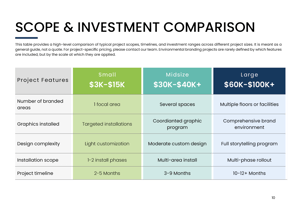

Our full guide explores how these factors affect investment levels using real project examples.
Environmental branding projects can vary widely in scope and cost. To help organizations plan more effectively, we created a guide that outlines real project examples, typical scopes, and common investment ranges.
While every project is unique, many environmental branding initiatives fall into a few general tiers based on scope and complexity.
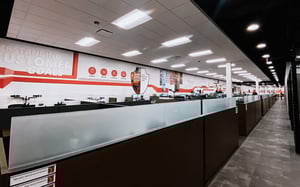
All-encompassing brand expression across an entire facility. Often include custom graphic design, wayfinding systems, and layered storytelling elements.
Example project: Signode
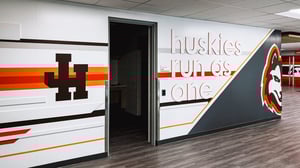
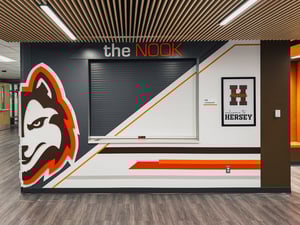
High-impact branding focused on key spaces. Ideal for organizations looking to tell a strong brand story without a full building overhaul.
Example project: Hersey High School
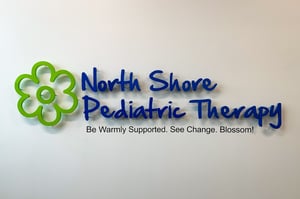
Targeted branding solutions for specific needs, such as privacy, visibility, or wayfinding. Smaller number of elements with clear, functional impact.
Example projects: Nuance Solutions and North Shore Pediatrics
/D214_WallGraphics-4.jpg?width=300&name=D214_WallGraphics-4.jpg)
/hersey_Mid%20size%20branding%20scope-2-1.jpg?width=300&name=hersey_Mid%20size%20branding%20scope-2-1.jpg)
/hersey_Mid%20size%20branding%20scope-6.jpg?width=300&name=hersey_Mid%20size%20branding%20scope-6.jpg)
/Nuance%20Solutions_Small%20Scale%20Environmental%20Branding.jpg?width=300&name=Nuance%20Solutions_Small%20Scale%20Environmental%20Branding.jpg)