

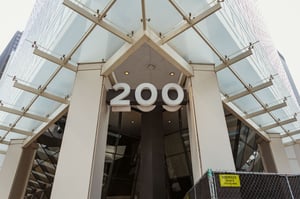
How a reset valuation makes
everything else possible

In early 2025, Glenstar and Minnesota-based private investor Patrick Halloran acquired a non-performing $151 million loan from Bank of China and simultaneously took control of the 761,775-square-foot, 44-year-old building from previous owner Manulife Financial via deed-in-lieu of foreclosure. The effective purchase price landed near $68 million, a fraction of the building's pre-pandemic value, per Crain's. This is the reset valuation thesis in a single transaction.
That reset is the prerequisite for everything that follows. As Steve Degodny, executive vice president of Transwestern’s agency leasing team, noted in REjournals: "Buildings that have been reset — where a new buyer has come in at a lower basis — are generally able to fund higher concessions in a way that distressed properties simply can't." Translation: Glenstar and Halloran can offer rent commencement deferrals, more competitive tenant improvement allowances, and creative deal structures that more rigid competitors cannot match. The capital structure is the design constraint, and resetting it is what reopens the runway to reimagine the building.
Hospitality-grade design as the leasing argument
Brad Klein, principal at Glenstar, framed the design intent in a February 2026 Chicago Sun-Times interview: "When we put our plan together … what became very apparent was we want to create something that feels [like] hospitality." The $25 to $30 million renovation includes a re-imagined three-story atrium lobby with warm wood tones, an expanded riverwalk patio, and a five-floor amenity package: a riverfront bar and lounge, two river-level golf simulators, a parlor gaming area, an enclosed library, a listening lounge, a 34th-floor conference center for 180+, and a full third-floor fitness club with spa-inspired locker rooms, cold plunges, and infrared saunas. More than 52,000 square feet has been earmarked for move-in-ready spec suites.
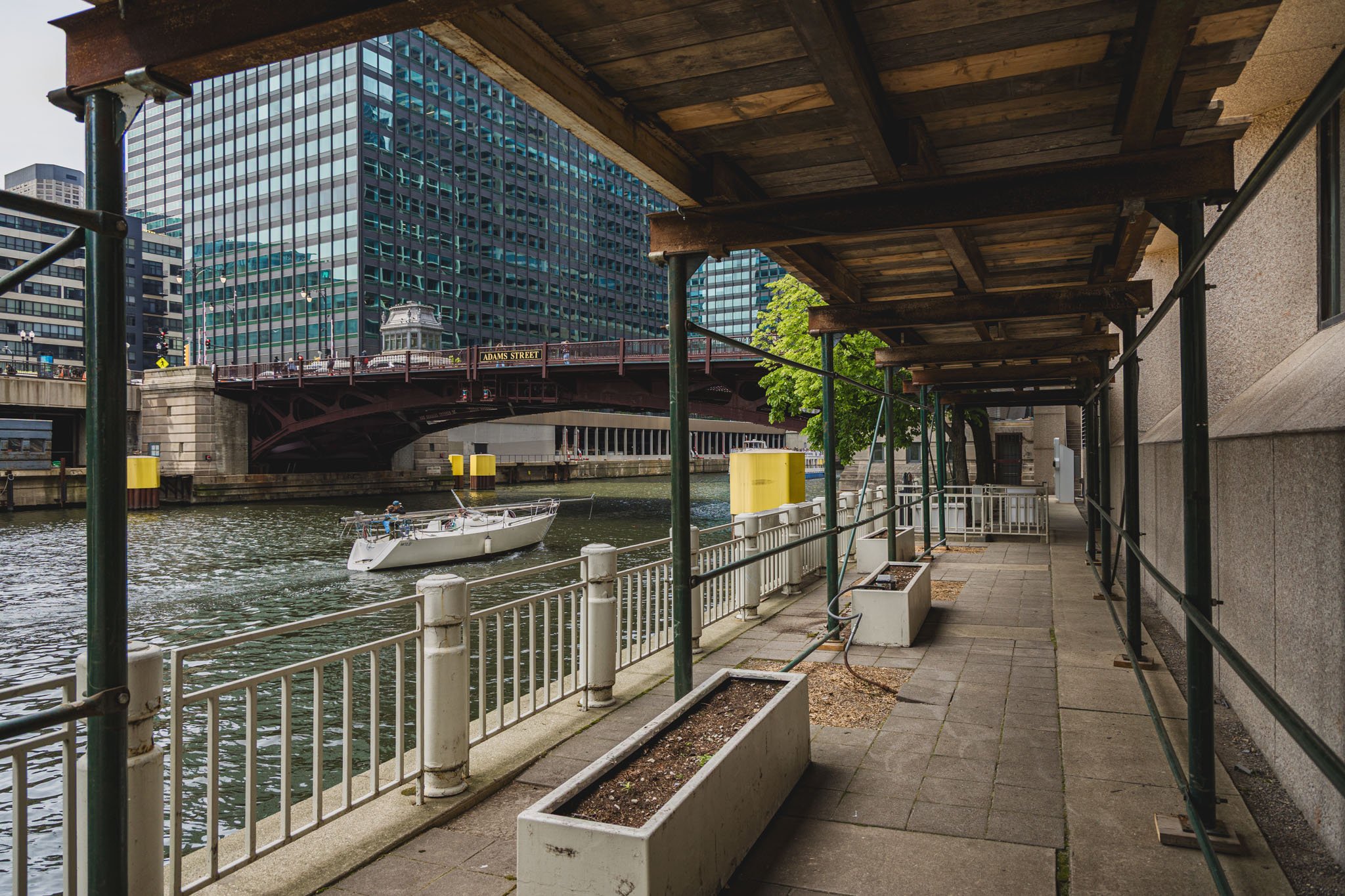 Current river front view at 200 S. Wacker
The Spec-Suite Imperative
That spec suite commitment is not a cosmetic detail. Construction commodity pricing remains 57.48% higher than at the start of the pandemic, per CBRE data cited by REjournals. For tenants weighing a relocation, the cost of build-out is now a meaningful obstacle. Pre-built suites neutralize that obstacle. In 2026, spec suite supply has become one of the most important competitive advantages a repositioning landlord can offer.
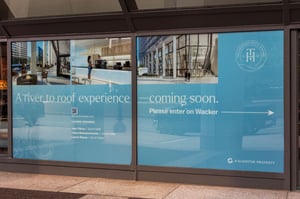
The verdict is still pending
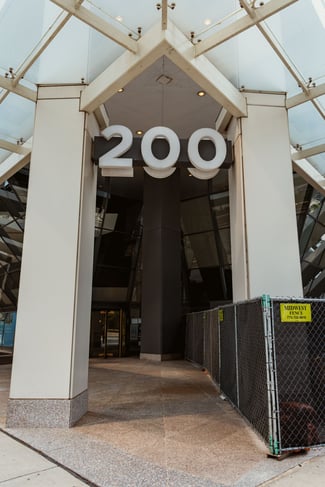 The tower is currently 57% leased (accounting for a pending move-out by law firm Goldman Ismail Tomaselli Brennan & Baum, per Glenstar via Crain's), below the downtown average. The lease-up over the next 18 to 36 months will determine whether 200 S. Wacker's playbook proliferates across Chicago's middle tier of office buildings, or whether the doubt about distressed-to-revived deepens.
The timing aligns with a broader shift in capital posture across the lender base. According to Crain's reporting from May 2026, commercial real estate lenders are now writing down troubled loans at discounts as steep as 85%, signaling the end of the "extend and pretend" era. In Q1 2026, workouts of troubled loans exceeded new additions to the distressed pile for the first time since 2022, per MSCI Inc. data cited in the same Crain's report. That cleanup is the financial mechanism by which more buildings will become available to new owners with the basis required to invest. For better or worse, we can expect more 200 S. Wackers.
Your Office Branding Project Guide
An office branding project is a coordinated effort that brings together brand identity, workplace culture, operational needs, and physical execution. This guide is designed to help you navigate that process with clarity. It breaks an office branding project into realistic phases, highlights common decision points, and provides practical guidance to help you plan confidently.